


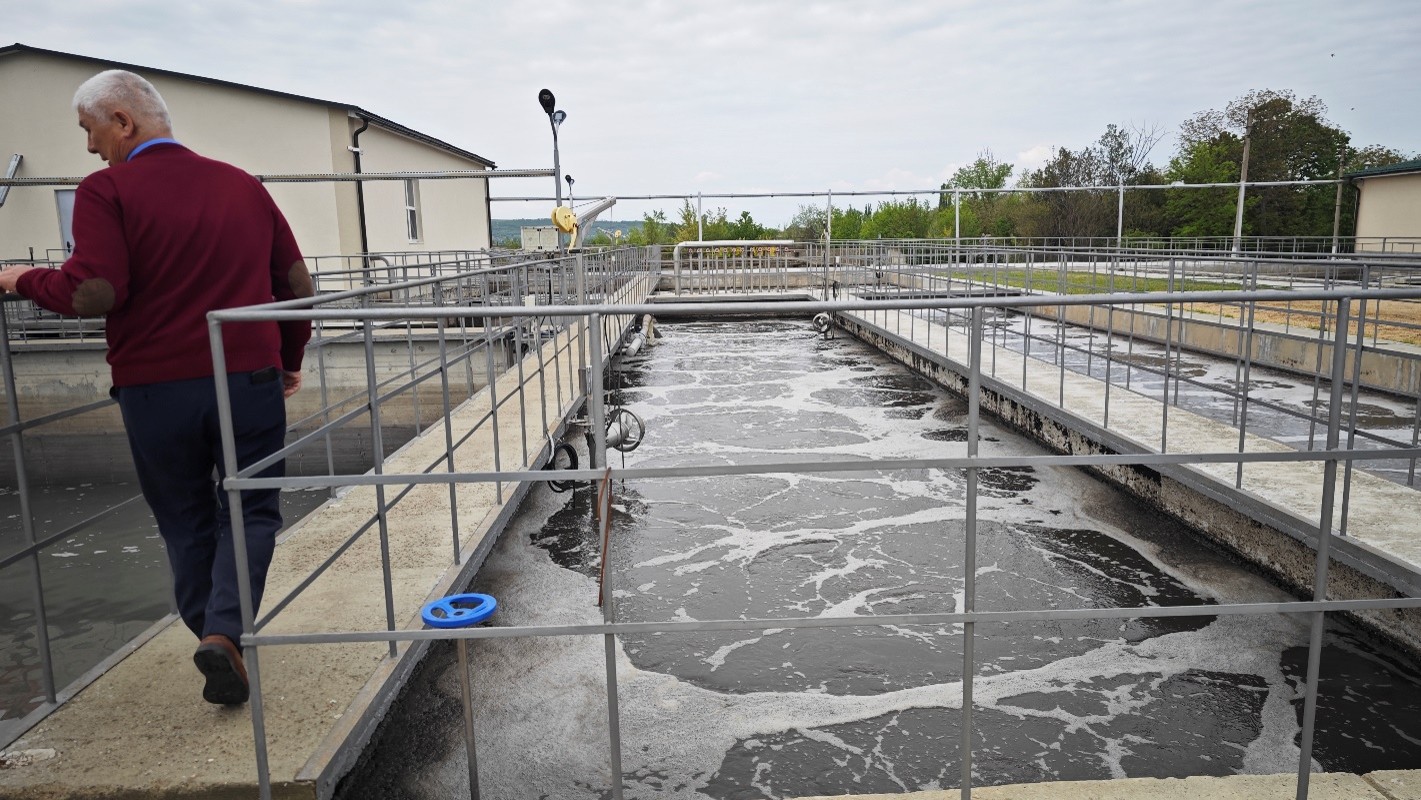
On 29 September 2026,Moldovan stakeholders including the representatives of the Ministry of Infrastructure and Regional Development of the Republic of Moldova and the Ministry of the Environment of the Republic of Moldova confirmed the priorities set by an EU-funded assessment of three pilot wastewater treatment plants in Căușeni, Fălești and Ungheni. The United Nations Industrial Development Organization (UNIDO), an implementing partner of the EU4Green Recovery East programme, carried out the assessment and presented the results at an online consultation.
Stakeholder input confirms the way forward
The consultation brought together the technical findings and the practical perspectives of institutions involved in wastewater management. Participants confirmed that the measures selected can respond to pressing operational needs without duplicating the larger reconstruction initiatives planned for the wastewater treatment plants.
Tailored solutions for three plants
Following a national baseline assessment of Moldova’s wastewater treatment infrastructure, UNIDO assessed the three plants for process optimisation, energy efficiency and sludge management opportunities. The plants differ in capacity, operating conditions and infrastructure needs, but the findings show that well-targeted improvements in equipment, instrumentation and operating practices could bring meaningful benefits in treatment efficiency and energy performance.
- In Căușeni, the focus is on improving monitoring, process control and energy efficiency through better flow measurement, pumping and aeration control, alongside improved sludge management.
- In Fălești, where the biological treatment stage needs substantial reconstruction, the proposed measures address immediate needs while complementing future modernisation, notably by discharging treated water by gravity and improving aeration and water quality in the meantime.
- In Ungheni, where a new treatment plant closer to the city is the longer-term solution, the priority is to rehabilitate the pumping infrastructure: screens that remove large debris, cleaning the reception basin, better pump control and maintenance.
Aeration means pumping air into wastewater so that bacteria can break down pollution; sludge is the semi-solid residue left after treatment.
Next step: feasibility studies
Eight priority measures were selected for detailed feasibility studies, based on their expected operational and energy-efficiency benefits and their compatibility with wider reconstruction plans. These studies will assess the technical and economic viability of the measures and turn the findings into project concepts. They will provide an evidence base for investment decisions and help mobilise national and international financing.
Through this work, the EU is helping Moldova move towards more reliable, energy-efficient and sustainable wastewater treatment.