


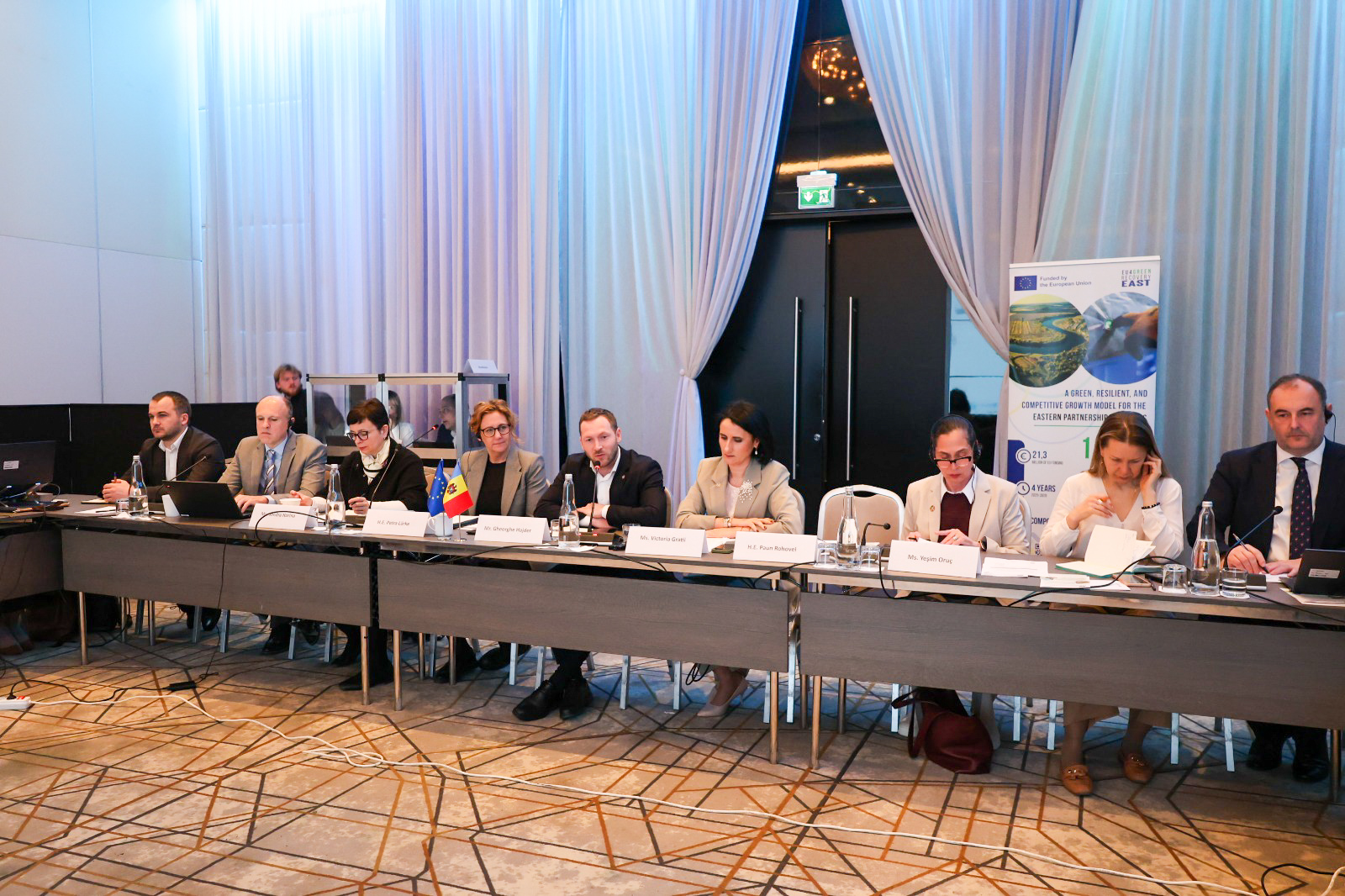
Moldova is stepping up reforms to strengthen water governance and ensure that investments in the sector are used more efficiently. These efforts are in the spotlight as the Ministry of Environment hosts the National Policy Dialogue (NPD) on water on 26 March, alongside the technical workshops on 25 and 27 March.
The European Environment Agency recently reported that Moldova is one of the most water stressed countries in Europe due to limited internal freshwater resources, a high dependence on transboundary water sources, exposure to high climate variability and seasonal fluctuations in water. On top of this, OECD analysis showed that Moldova witnesses extremely high water intensity per person, with freshwater abstraction rates of 143%, compared to the OECD average of only about 12%. Such excessive abstraction puts Moldova at serious risk of exacerbating existing water stress.
Climate change, recurrent droughts and uneven infrastructure continue to affect households, agriculture and industry. UN data shows that nearly 40% of rural residents lack access to piped water. Meanwhile, alternative local water sources such as wells and springs require improved quality control, and the small rivers that feed the Nistru and Prut are becoming increasingly vulnerable to pollution and seasonal drying. The recent oil pollution in the Nistru River shows
how fragile drinking water supply is.
Reforms as a foundation for sustainable investment
The NPD brings together national and local authorities, academia, civil society, EU institutions, EU Member States and International Organisations. Discussions will focus on the outcomes of Moldova’s recent EU accession screening in the water sector, as well as the next steps in aligning legislation with EU standards. The discussions will also address reforming water-
related economic instruments to ensure sustainable financing for river basin councils, wastewater treatment, irrigation, and water monitoring.
The NPD in Moldova has had a track record of promoting the case for policy reform. With EU support, design norms for small scale water supply infrastructure were updated Following extensive consultation through Moldova’s NPD platform. Evidence based analysis builds the momentum and confidence to drive reforms, in this example facilitating a change in secondary legislation and a code of practice to make investments in small scale water supply infrastructure more affordable and aligned with EU-good practice. Through EU4Green Recovery East (2025-2028) and complementary initiatives, the European Union supports institutional reform, monitoring systems and policy alignment in Moldova´s water sector.
Acting together for water: from policy to practice
Protecting and managing water sustainably requires collective action by public authorities, the private sector, and communities.
Recent EU-funded initiatives on water supply and sanitation are already improving access and quality for Moldovan citizens. For example in Ungheni, a new water network provide safe drinking water to over 24,000 people, and the sewerage network expansion increased connections by more than 140 users. At the same time, strengthening monitoring and data collection on wastewater infrastructure is a priority, helping authorities better track performance, plan investments effectively, and accelerate modernization of Moldova’s water sector.
Under a Team Europe approach, Sweden supports Moldova through the Green Agenda project, and explore wastewater reuse for agriculture. A study conducted as part of the project shows that treated wastewater could provide a reliable supplementary source of irrigation, thereby enhancing water security, particularly as drought risks increase.
Aligning with EU water standards is not only about environmental compliance, but also about building a water system that supports food security and protects public health. Transparent water allocation rules, reliable data, and investment create predictability for businesses and local authorities. By combining institutional reform, infrastructure investments, business innovation and international partnerships, Moldova is building a more secure and sustainable water future.
Credit picture: Ministry of Environment of the Republic of Moldova