



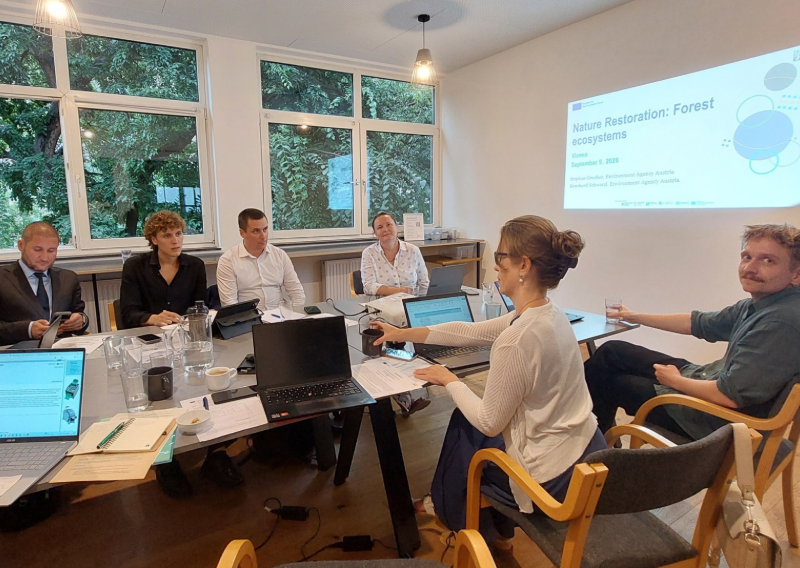
A two-day study visit in Vienna brought together Ukrainian, Austrian and EU4Green Recovery East experts to exchange practical experience on Nature Restoration planning and discuss how EU requirements can be translated into an effective national implementation pathway for Ukraine.
Representatives of Ukraine’s Ministry of Economy and Environment met with Austrian and EU4Green Recovery East experts in Vienna on 9 - 10 September 2026 for a technical study visit dedicated to Nature Restoration and biodiversity.
The Ukrainian delegation included Eduard Arustamyan, Director of the Department of Protected Areas and Biodiversity at the MEE, Yurii Rasiuk, Head of the Division of Biosafety and Protection, Reproduction of Flora and Fauna, Department of Protected Areas and Biodiversity at the MEE, and Olesya Petrovych, Senior Expert on Biodiversity Protection of the Reform and Recovery Support Team at the MEE.
The meetings were organised under Component 3 of EU4Green Recovery East, which supports legal approximation with EU environmental legislation. For Ukraine, this work also forms part of the broader preparations for EU accession – development of Regulation specific Implementation Plan.
The discussions focused on Ukraine’s draft Nature Restoration roadmap, Austria’s experience in preparing its National Nature Restoration Plan, and the practical steps needed to move from EU legislative requirements towards implementation.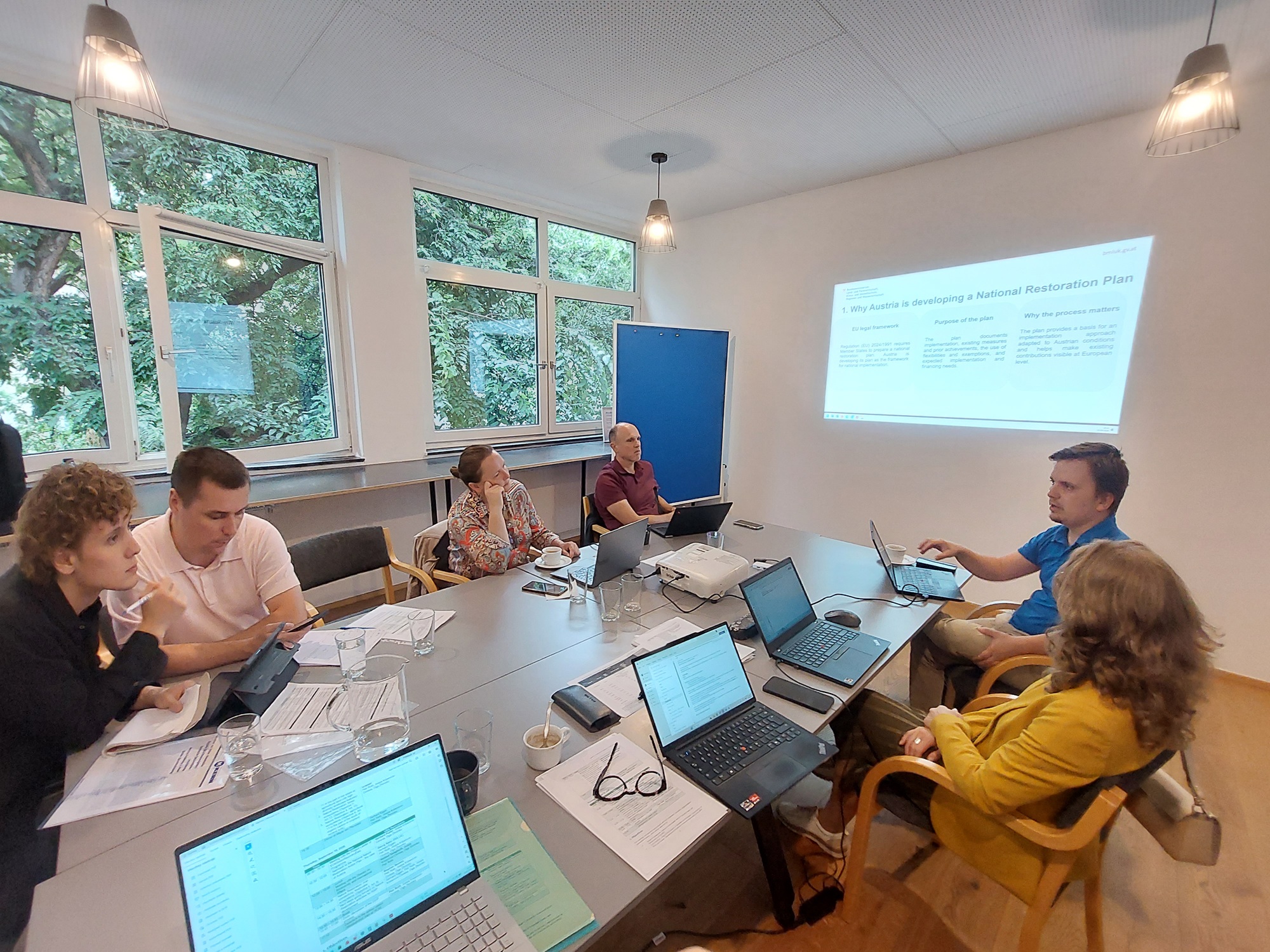
Nature Restoration across sectors
One of the central messages from the Ukrainian side was that implementing the EU Nature Restoration Regulation goes well beyond traditional nature conservation.
The Regulation covers a wide range of ecosystems and interacts with several economic sectors. For Ukraine, this means addressing restoration needs across agricultural landscapes, forests, urban ecosystems, rivers and freshwater systems, as well as habitats and species.
The Ministry representatives highlighted that implementation will therefore require close cross-sectoral cooperation, contributions from scientists across different disciplines, changes in approaches to natural resource use and conservation, and significant investment. At the same time, comprehensive restoration can contribute to improving the quality of the living environment, the availability of natural resources and the sustainability of economic activities.
Learning from Austria’s experience
A major objective of the visit was to explore Austria’s experience with national Nature Restoration planning.
For Ukrainian experts, the exchange provided an opportunity to discuss the solutions, methods, indicators and scientific and practical approaches used by Austrian counterparts. The Ministry noted that many ecosystems and implementation challenges in Austria and Ukraine are comparable, meaning that relevant experience can provide useful reference points for Ukraine.
The exchange also highlighted the importance of engaging stakeholders, policymakers and the wider public in the development of a national restoration plan. Austria’s experience can therefore offer insights not only into technical implementation, but also into the processes needed to discuss, develop and build support for national Nature Restoration planning.
Start with the gaps
According to Petr Roth, EU4Green Recovery East external biodiversity expert, one of the most important first steps is to establish a clear baseline.
This means assessing what already exists in terms of methodologies, datasets and responsible institutions, identifying what is missing and determining how the gaps should be addressed and by whom.
Roth noted that the Austrian experience demonstrates that progress is possible even where data are not yet complete, provided that there are dedicated institutions, strong intersectoral cooperation and access to available data.
He also stressed that implementation cannot simply copy a single model. While EU Nature Restoration objectives provide the common framework, countries need to develop nationally appropriate approaches in areas where EU legislation does not prescribe one specific method.
Institutions and expertise matter
Another important element is institutional capacity. Effective implementation requires people who understand both the technical concepts and the relevant EU legal framework. Roth highlighted that permanent expert capacity and clearly assigned institutional responsibilities are essential if implementation plans are to deliver results in practice.
Correct interpretation of technical terminology is equally important. Differences in how concepts are currently applied in EU Member States and countries working through frameworks such as the Emerald Network can have significant consequences for data collection, assessment and future planning.
Towards Ukraine’s national implementation pathway
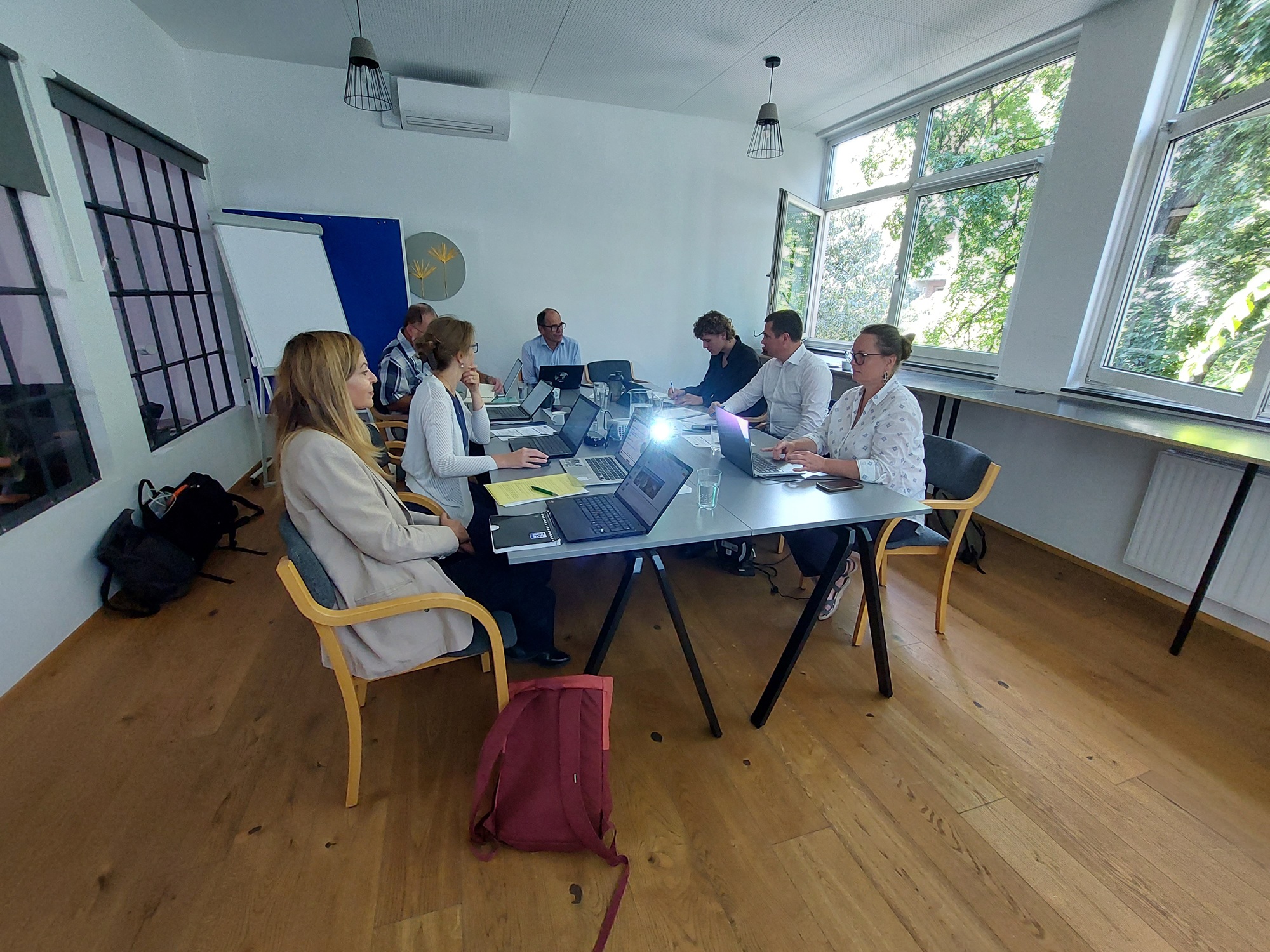
The Vienna study visit was not intended to produce a final Nature Restoration plan. Instead, it formed part of an ongoing technical process supporting Ukraine in translating the requirements of the EU Nature Restoration Regulation into a practical national implementation pathway, aimed at clarifying the steps Ukraine will need to take as it develops its own implementation approach.
An important next step in this broader process is to clarify how the Regulation’s requirements can be addressed through a Regulation-specific implementation plan. Such a plan could help structure the necessary actions, identify institutional responsibilities, establish priorities and timelines, and determine the technical and financial resources needed for implementation.
The discussions helped contributed to this process by connecting connect three essential elements: Ukraine’s national priorities, practical EU Member State experience and the technical requirements of EU environmental legislation.