


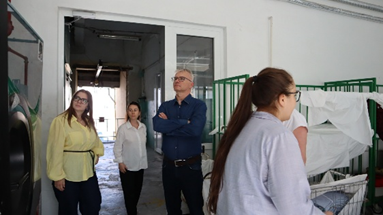
As part of the industrial waste mapping activities under the EU-funded EU4Green Recovery East programme, UNIDO, together with international and national experts, conducted field visits in Moldova’s selected pilot regions of Chișinău and Bălți. The visits brought together representatives of industry, public institutions, and national authorities to gain first-hand insights into industrial waste generation, material flows, current waste management practices, and opportunities for circular economy solutions across key sectors. By complementing existing data with on-the-ground observations and stakeholder discussions, the assessments aimed to identify practical measures for waste prevention, reuse, recycling, resource recovery, and industrial symbiosis, while informing future policy development and investment priorities for Moldova's transition to a more circular economy.
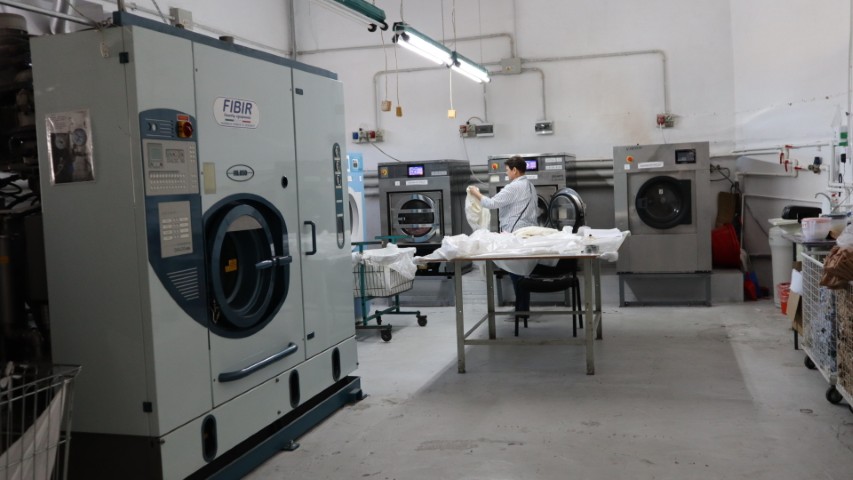
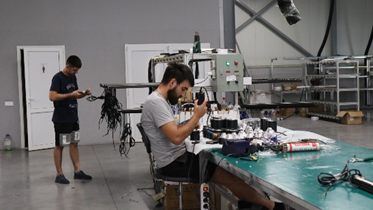
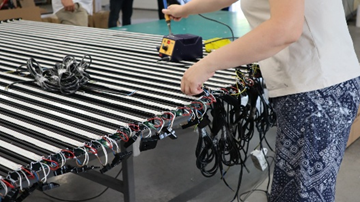
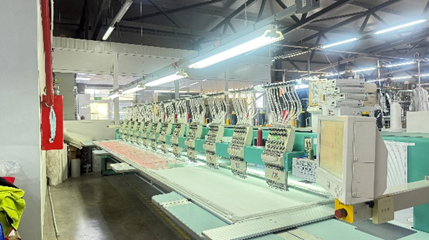
The day began at the Free Economic Zone Chișinău, where electronics, glass-fibre/mineral materials and plastics processing operate side by side, making it a strong starting point for tracking waste streams like metal and electronic scrap, mineral residues and plastic offcuts. The team explored questions that goes beyond official statistics: what leaves the production line as waste, who takes it next, and where the chain breaks down. From there, the team visited Steaua Red, a textile manufacturer. Textiles is one of Moldova's four priority sectors for circular economy, yet among the least documented, and the discussion focused on what happens to textile waste once it leaves the factory.
The team brought fields insights to the Ministry of Environment, in a joint meeting with representatives of the EU4Green Recovery East programme and the Environmental Agency. Discussions covered IWM priorities and policy, gaps in data collection and reporting, investment needs, legal barriers to reuse and valorisation, and how today's field evidence can feed directly into future policy decisions.
 |
 |
 |
The next day, field activities continued, this time in the municipality of Balti. The team was accompanied by representatives of the Ministry of Environment and the Chamber of Commerce.
The field visits provided an opportunity to look at industrial waste not only as an outcome of production processes, but also as resources that can be kept in the economy for as long as possible. Discussions focused on opportunities to prevent waste generation, reuse, recycle and recover materials, as well as on how circular practices can help reduce resource losses and improve resource efficiency.
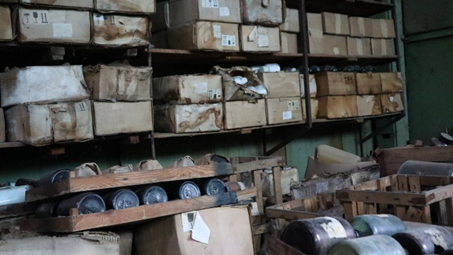
Throughout the day, the team visited Floarea Soarelui SRL, Raut Industrial Park, FinPlast SRL and CB-TEX SRL, covering different types of industrial activities, from food production and electronics to plastic recycling and the textile industry. The information is important for advancing the circular economy, as it helps identify where resources are being lost from the economic cycle and what solutions can help keep materials in the economy for longer, instead of becoming waste.
 |
 |
Key insights from the field visits
- Industrial waste streams and generation points, including metal and electronic waste, mineral residues, plastic and textile waste;
- Current waste management and material flows, including what happens to waste after it leaves the production process and where gaps or disruptions occur;
- Opportunities for prevention, reuse, recycling and recovery, with a focus on keeping materials and resources in the economy for longer;
- Resource-efficiency and industrial symbiosis potential, including opportunities to identify materials that could be used as inputs in other production processes;
- data and policy gaps, including challenges related to waste data collection and reporting, investment needs and barriers affecting the reuse and recovery of materials.